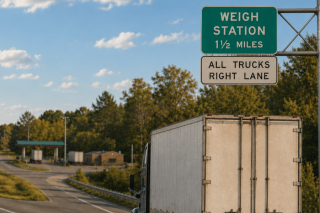
You cross into Oklahoma on a Tuesday morning, and every weigh station on the interstate is lit up. Trucks are lined up on the shoulder, enforcement officials are walking the rows, traffic is backed up behind the ramp. Nothing about your day changed, but the odds just did.
DOT blitz week is a 72-hour enforcement initiative run across the United States, Canada, and Mexico. It is the largest targeted commercial motor vehicle enforcement program in the world, and for three days the volume of intensive roadside inspections climbs far past normal. For an owner-operator, the difference between a clean pass and an out-of-service order comes down to what got checked before the truck left the yard.
Here is what to expect during DOT blitz week, what inspectors are actually looking at, and how to keep your wheels turning through it.
What Is DOT Blitz Week?
The CVSA International Roadcheck Explained
Blitz week is the common name for the CVSA International Roadcheck. The Commercial Vehicle Safety Alliance writes the out-of-service criteria inspectors work from and coordinates enforcement agencies across North America. Over the 72-hour window, certified officials average roughly 15 vehicle inspections every minute.
Why It Is Also Called DOT Week or DOT Blitz
You will hear it called DOT Week, the DOT Blitz, or simply blitz week. Trucking companies, brokers, and truck drivers use the terms interchangeably. It is one event under several names, and the trucking industry treats it as a prepare-and-pass-inspection week.

When Blitz Week Happens and How Long It Lasts
The 72-Hour Window
International Roadcheck typically runs three days in mid-May. CVSA announces exact dates months ahead, so check the current year's schedule rather than assuming. Inspections happen at weigh stations, temporary sites, and roving patrols in various locations, and enforcement often ramps up the week before the official start.
Other CVSA Enforcement Campaigns Through the Year
Roadcheck is the big one, but it is not the only one on the calendar.
-
Operation Safe Driver Week — typically July. Targets driving behavior rather than equipment: speeding, following too closely, improper lane changes. The Operation Safe Driver program also enforces against other motorists, not just commercial vehicles.
-
Brake Safety Week — typically late August. Seven days of mostly Level IV inspections focused on brake components. Current details sit on the CVSA brake safety campaign page.
-
Unannounced initiatives. A one-day Brake Safety Day and a five-day hazardous materials road blitz can land at any point in the year with no warning at all.
Preparation cannot be seasonal. A truck that only gets a hard look in May is a truck that fails in October.
The Focus Area CVSA Names Each Year
CVSA highlights specific categories for heightened scrutiny each year and publishes the focus area in advance. Everything still gets inspected, but the named categories draw extra attention on both the driver side and the vehicle side. Recent years have centered on two.
ELD Tampering, Falsification, and Manipulation
ELD compliance means the electronic logging device accurately records duty status and hours of service against federal regulatory requirements. Inspectors look for ELD tampering, unlogged driving time, and driver logs that do not line up with fuel receipts or prior inspection reports. ELD falsification has ranked as the second most-cited violation in recent years, topping 58,000 instances annually. Records that are not accurate and up to date bring citations or an out-of-service order on the spot.
Cargo Securement and Load Stability
Improperly secured loads create roadway hazards for you and for other motorists. FMCSA cargo securement rules are laid out in 49 CFR Part 393, and inspectors check tie-downs, blocking, and bracing along with weight distribution and load stability. Unsecured loads generate more than 18,000 violations in a typical year. Cargo securement problems can trigger an immediate out-of-service order, and if you run flatbed or step deck freight, this is where your exposure is highest.
What Inspectors Check During Roadside Inspections
The Level I Inspection and Its 37 Steps
Most inspections during blitz week are the North American Standard Level I inspection, a comprehensive 37-step examination of both vehicle and driver. Budget 45 minutes to an hour. A Level 1 DOT inspection is the only one that earns the CVSA decal, good for up to three months, which tends to move you through weigh station inspections faster.
Driver Credentials and Hours of Service
Driver compliance starts with a valid commercial driver's license, current medical certificates, and a clean record of duty status. Officials verify driver credentials are up to date and that driver logs match the supporting documents in the cab. A driver-only inspection covers all of this without touching the equipment.
Vehicle Components and Maintenance
On the vehicle side, inspectors work through brakes, tires, lights, steering, suspension, and coupling devices. Vehicle maintenance violations remain the largest category by volume, and research from the American Transportation Research Institute tracks equipment upkeep as a persistent cost pressure for small carriers.

The DOT Violations That Put Trucks Out of Service
Roughly 18 percent of vehicles inspected during a recent Roadcheck were placed out of service. These critical violations come up most:
-
Brake systems. A vehicle is parked when 20 percent or more of its service brakes have a defect. Out-of-adjustment slack adjusters, cracked drums, and chafed air hoses are the usual culprits.
-
Tires. Tread below the minimum, exposed belt material, or an audible leak ends the stop immediately. A flat tire is an automatic out-of-service condition.
-
Lights and reflectors. The cheapest DOT violations to prevent and among the most frequently written. A burned-out marker lamp is a citation you handed over for free.
-
Improperly secured loads. Missing or damaged tie-downs, inadequate working load limits, and freight that has shifted in transit.
-
Hours of service and ELD noncompliance. Form and manner errors, missing documents, and falsified logs follow the driver rather than the truck.
Out of Service Orders and What They Trigger
Out-of-service orders mean the truck does not move until the defect is repaired, which roadside means a mobile mechanic at emergency rates or a tow. The repair bill is rarely the expensive part. The violation is recorded against your DOT number and feeds the FMCSA safety measurement system, where it works against you for two years. Underwriters pull that record at renewal, which is one of the quieter reasons owner-operator insurance premiums climb.
Your Pre-Blitz Safety and Compliance Checklist
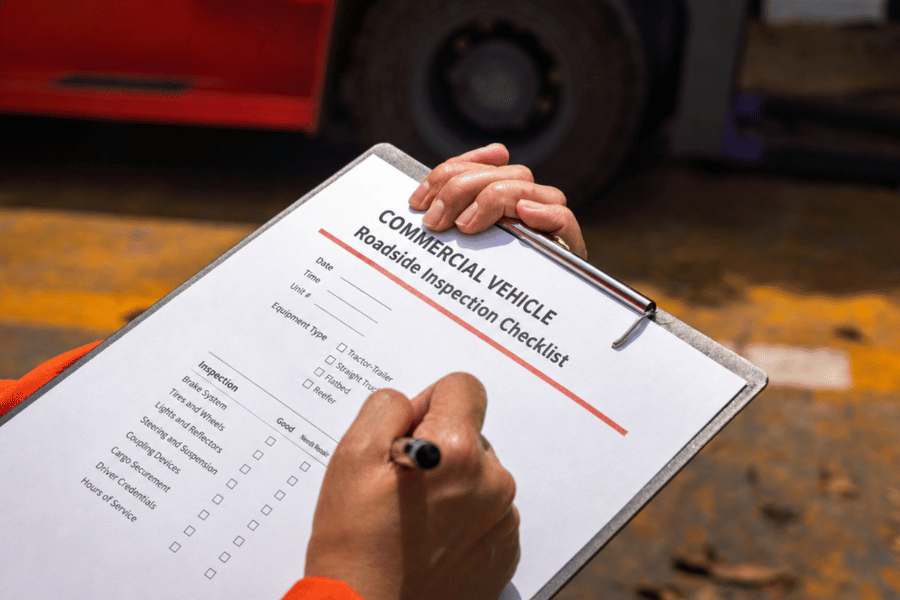
A DOT inspection checklist is not complicated. The trick is running it before the blitz instead of during it, and it pairs naturally with the daily habits that keep drivers safe on the road.
The Driver Side
-
Credentials. CDL, medical card, registration, current annual inspection, and proof of insurance, all current and in the cab.
-
ELD compliance. Confirm the device is functioning, your duty status is accurate, and no unlogged driving time is sitting in the record.
-
Supporting documents. Fuel receipts and trip paperwork should corroborate your hours of service, not contradict them.
The Vehicle Side
-
Brakes and air system. Check pushrod travel at every wheel position, measure lining thickness, run a leak-down test, and trace hoses for chafing.
-
Tires, wheels, and lights. Gauge pressures rather than thumping them, check for loose lug nuts, and do a full walkaround with someone cycling the brakes and signals.
-
Securement gear. Inspect straps for cuts and chains for stretched links, and confirm your tie-downs and working load limits cover the freight aboard.
What Blitz Week Does to Freight and Rates
Capacity, Spot Rates, and Rolled Freight
Blitz week creates temporary bottlenecks across North American freight. Some trucking companies park voluntarily rather than risk an inspection, contracted carriers get stretched, and brokers roll freight into the following week. Capacity tightens, and spot rate volatility follows, which is worth understanding alongside how freight rates are calculated. If your equipment and paperwork are in order, a tight spot market is an opportunity rather than a problem.
Keeping Cash Flowing When a Truck Gets Parked
Here is the situation that breaks small carriers. A repair bill lands Tuesday. Your last three loads are invoiced, but nothing is due for 45 days. You are not unprofitable and not short on work. You just do not have cash on hand when you need it, and the truck stays parked because of it.
That gap is what freight factoring closes. Instead of waiting 30 to 90 days on a broker, you sell the invoice as soon as the load is delivered and get paid right away. Invoices are processed same day, next-day ACH funding costs nothing, and same-day wire is available for a small fee when a repair cannot wait. No setup cost and no monthly minimum. Credit checks on brokers and shippers are free, and invoicing is handled for you.
Roll Through the Next DOT Blitz Week Instead of Sitting Through It
A DOT blitz week is not something you talk your way out of on the shoulder. It is won weeks earlier, in the yard, with a gauge and a flashlight and an hour you would rather spend elsewhere. Safety and compliance are not paperwork; they are uptime. If you want the dispatch side handled, loads booked at rates that hold up, and invoices turning into cash the day a load delivers, get in touch with our team, and we will get you set up before the next campaign. Stay ahead of it, and you keep finding good freight while everyone else sits.